Source Vinyl Decal for Floor, Glass, and Car Body Applications
Source vinyl decal options from 30 available products. Compare features like waterproof materials, digital printing precision, and adhesive types for floor, glass, and automotive uses. Find suitable suppliers for custom branding and decorative needs; compare the available evidence and request quotations based on your requirements.
Key considerations
Products List




Comprehensive Sourcing Guide
Vinyl Decal Sourcing Guide
Vinyl decals occupy a broad corner of the label and graphics market, and buyers who arrive without a clear specification often receive quotes for products that differ materially from what they intended. The listings observed in this category range from small die-cut logo and badge stickers to full-width printed vinyl rolls, transparent glass stickers, cartoon floor decals, and car body graphics. Because the keyword "vinyl decal" covers all of these, the first procurement decision is not choosing a supplier but defining which product family you actually need: a cut vinyl badge, a digitally printed adhesive graphic, or a functional label.
This guide is written for B2B purchasing teams evaluating Chinese manufacturing listings of the kind summarized here. It draws only on attributes actually observed in the product data — materials such as vinyl and PVC, digital CMYK printing, die-cut or kiss-cut finishing, ROHS declarations, and origins in Guangdong and Shanghai — and flags where buyers must request evidence rather than assume it. Use it as a checklist companion to supplier negotiations, not as a substitute for samples and documentation.
Product Scope and Observed Listing Signals
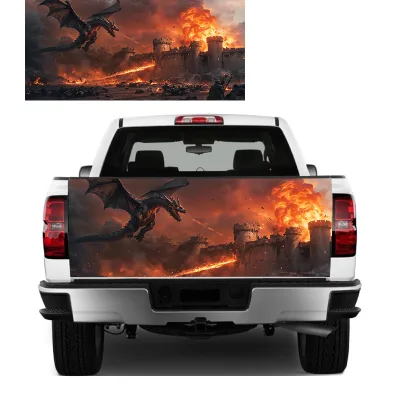
The observed listings cluster into several recognizable product types. One group covers custom logo and badge stickers made from vinyl with a general super-stick adhesive, positioned as decorative stickers with waterproof performance. Another group covers large-format printed vinyl: transparent PET film types on glassine base material, printed at 720×1440 dpi in CMYK full color, with a maximum width of 1.52 meters and product sizes described as within five meters width and effectively infinite length. A third group addresses vehicle use, including small car body stickers, windshield and car window stickers, and annual inspection protection stickers, some explicitly branded as 3M vinyl adhesive products.
Application fields listed across the data set include bottled beverages, shipping labels, food packaging, price tags, medicine, packaging film, shop windows, and custom stickers in general. Stated origins include Guangdong and Shanghai, with packing described variously as carton, paper tube plus carton, or customized. Product models observed include DC-31 and OEM designations for floor decals and transparent glass stickers. These signals tell buyers the category spans decorative, functional, and industrial uses, so matching the listing type to your use case is the essential first filter.
Technical Specifications to Verify
Material and construction should anchor your specification sheet. Confirm whether the face film is calendered vinyl, cast vinyl, or transparent PET, and whether the base material is glassine as listed for the large-format items. Verify adhesive type and tack: the listings mention "general super stick," which is a marketing description rather than a measurable spec, so request adhesive thickness, initial tack, and shear values appropriate to your surface. For printed work, confirm the digital printing resolution — the observed 720×1440 dpi full-color CMYK process — and whether your artwork formats (the listed PDF, JPEG, AI, PSD, EPS, TIF, or JPG) are compatible with the supplier's prepress workflow.
Dimensional and finishing parameters matter equally. Confirm maximum printable width against the observed 1.52-meter figure if you need roll graphics, and clarify whether die-cut or kiss-cut finishing matches your application, since kiss-cut is standard for peel-and-apply stickers while die-cut separates individual shapes. For car applications, specify whether you need small body stickers, windshield stickers, or window film. Ask about lamination, since outdoor durability claims — the observed warranty of colors lasting two to three years — depend heavily on laminate and ink systems.
Compliance and Safety Documentation
The only standard explicitly observed in the listing data is ROHS, declared on one product line with origin Guangdong. Buyers should treat this as a listing attribute and request the actual ROHS declaration and test coverage for the specific material batch, since the restriction targets hazardous substances in components and a declaration without supporting documentation carries limited weight in regulated markets. If your decals contact food, medicine, or bottled beverages — all listed as intended uses — you must separately verify food-contact compliance for both adhesive and face film, because general vinyl adhesives are not automatically food-safe.
For ink systems, one listing states UV-proof eco-friendly ink, which suggests outdoor fade resistance and reduced environmental impact, but the buyer should request the ink's material safety data sheet and any relevant low-VOC or children's-product safety documentation if your market requires it. The general standard field in some listings reads simply "customized," meaning the supplier will test or certify to whatever you specify; take advantage of this by writing compliance requirements into the purchase order rather than accepting undocumented claims. Always reconcile certificates against the exact product model you are ordering.
Cost Drivers and Commercial Terms
Observed listing prices span from near zero to $45.75, and MOQs range from 1 to 5,000 pieces, which reflects the category's split between sample-scale custom orders and volume label production. Your price will be driven primarily by order quantity, print complexity, number of colors, cutting method, and material choice — cast vinyl and laminated transparent PET cost more than basic calendered stock. Tooling for die-cut shapes adds setup cost on small runs, while digital printing reduces per-unit cost at low volumes because it needs no plates.
Commercial terms worth clarifying before commitment include packaging (the listings show carton, paper tube plus carton, and customized packing), freight responsibility for oversized roll goods, and artwork handling. One listing advertises free samples for advertising banner products, so test whether your supplier offers pre-production samples at low or no cost. Warranty terms also appear in the data — colors lasting two to three years — but confirm in writing whether the warranty covers fade only or also adhesive failure, and what evidence is required to claim it. Payment terms and lead times were not stated in the observed data and must be negotiated directly.
Supplier Qualification and Quality Control
Qualify suppliers against the specific product family you need, not the keyword. A factory printing 1.52-meter roll graphics on PET film operates very differently from one producing small die-cut car badges, even if both appear under the same search. Verify manufacturing location against claimed origin — Guangdong and Shanghai both appear in the data — and confirm whether the supplier manufactures in-house or trades. For customized-standard products, a capable supplier should articulate what tests they can perform and what third-party verification they can arrange, which is itself a useful competence signal.
Quality control should be built into the order rather than inspected after delivery. Request a pre-production proof matching your submitted artwork file, approve color against a physical or calibrated digital proof since CMYK reproduction varies by machine, and define acceptable tolerance for cut alignment and adhesive placement. For volume orders, agree on an inspection sampling plan and whether third-party inspection is permitted before shipment. Check that incoming artwork in PDF, AI, PSD, or EPS formats is handled by a dedicated prepress step, because many defects in this category trace back to artwork scaling and color conversion errors.
Long-Term Procurement Checks
Once a supplier is proven, protect consistency across repeat orders. Lock the specification into a controlled document covering face film, adhesive, liner, ink set, printing resolution, cutting method, and packaging format — whether carton, paper tube, or customized packing as observed in the listings. Require the supplier to notify you of any material substitution, since vinyl grades and adhesive formulations change quietly in commodity categories, and a "same" product from a new film lot can perform differently on your application surface.
Monitor performance in the field against the stated durability expectations. The observed two-to-three-year color warranty gives a benchmark for outdoor graphics, but track actual fade, edge lifting, and adhesive residue on your specific substrates — glass, car bodies, shop windows, or packaging film — and feed failure data back into the spec. Re-verify ROHS and any food-contact documentation periodically rather than relying on a one-time certificate, and reassess pricing annually against volume. Suppliers who proactively flag artwork, material, or process risks are worth retaining; those who only quote are not.
FAQs
What materials are commonly used for vinyl decals?
Most vinyl decals use PVC or vinyl film with an adhesive backing, sometimes paired with transparent PET film or glassine base material. Vinyl is flexible, durable, and accepts full color digital printing well. For outdoor or beverage applications, buyers typically choose waterproof vinyl with UV-resistant eco-friendly ink to keep printed colors lasting two to three years outdoors.
Can vinyl decals be customized with my own logo and artwork?
Yes, customization is available for vinyl decals, and suppliers generally accept logo or badge designs as adhesive stickers. You can submit artwork in PDF, JPEG, AI, PSD, EPS, TIF, or JPG format. Designs are reproduced with CMYK full color digital printing at 720 by 1440 dpi, and die cut or kiss cut shaping is possible for personalized sticker styles.
How should I choose between die cut and kiss cut vinyl decals?
Choose die cut when each decal should be cut fully through the vinyl and backing into individual shapes, which suits decorative stickers and packaging labels. Choose kiss cut when you want decals left on a continuous backing sheet, which works well for logo stickers, price tags, and shipping labels that need easy peeling and application by hand.
Which vinyl decals are suitable for outdoor use on windows and car bodies?
For outdoor use, select waterproof vinyl decals made with 3M brand vinyl adhesive and UV-proof eco-friendly ink. These hold up on shop windows, windshields, and car bodies, with printed colors rated to last two to three years. Transparent glass stickers and small car body decals are common options, and roll formats can reach large widths for window coverage.
What printing specifications should I expect for custom vinyl decals?
Custom vinyl decals are typically produced with digital printing delivering CMYK full color output at 720 by 1440 dpi precision. Maximum print width is commonly around 1.52 meters, with product sizes reaching up to 5 meters in width and effectively unlimited length in roll form. Color durability is usually warranted for two to three years under normal display conditions.
How are vinyl decals packed and shipped in bulk orders?
Bulk vinyl decal orders are commonly packed in cartons, while roll-format decals are often supplied one piece per paper tube with roll and carton packing. Packing can also be customized to your requirements. Stickers should be kept flat, dry, and away from direct sunlight before application so the general super stick adhesive retains full bonding strength.
Can I get samples before placing a bulk vinyl decal order?
Free samples are offered for some vinyl decal products such as advertising banners, so you can verify print quality, adhesive strength, and material finish before committing. Confirm sample availability, shipping cost, and lead time with each supplier. Because customization is available, a pre-production sample matching your artwork is a sensible step for larger volume orders.
Which applications are vinyl decals suitable for?
Vinyl decals suit a wide range of uses including custom stickers, bottled beverage labeling, shipping labels, food packaging, price tags, medicine labels, and packaging film. Decorative applications include shop windows, car windshields, and car body decoration, while cartoon-patterned multicolor decals and cartoon vinyl floor decals are popular for promotional and retail display purposes.